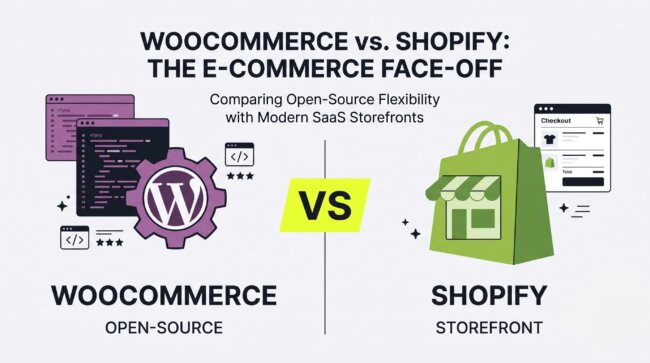
WooCommerce vs Shopify remains the platform decision that defines long-term costs and development flexibility for US merchants in 2026. Shopify sells speed and simplicity. WooCommerce sells full control over code, data, and hosting — this guide compares both on price, scalability, and real ownership.
WooCommerce vs Shopify: Head-to-Head Comparison Table
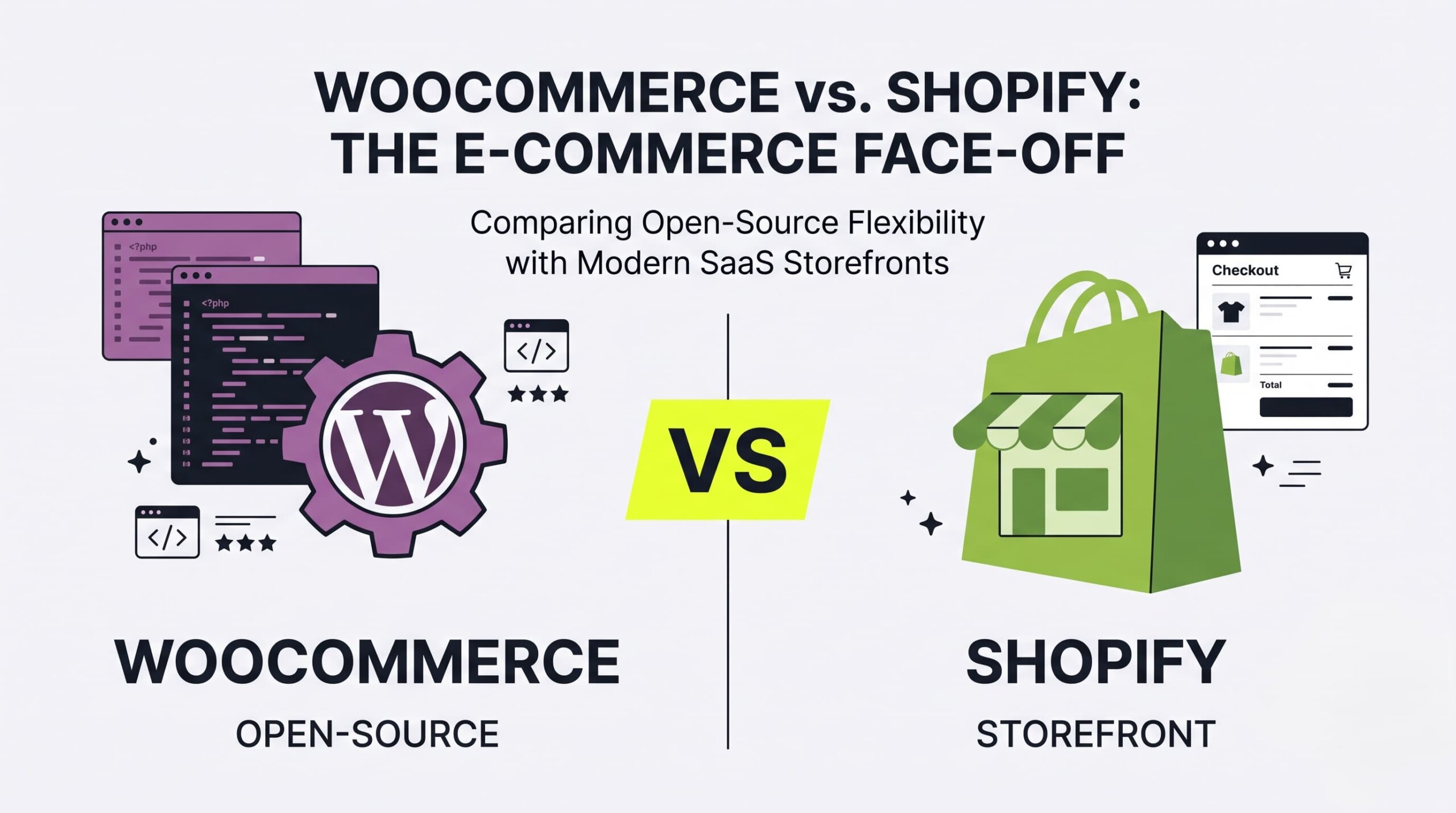
WooCommerce vs Shopify comes down to renting a managed SaaS service or building your own store on open-source software. Shopify controls the entire infrastructure for you. WooCommerce runs inside WordPress, hands you full code access, and lets you pick any hosting provider you trust.
| Parameter | Shopify | WooCommerce |
|---|---|---|
| Hosting | Included in every plan (managed cloud) | Self-hosted; you choose the provider |
| Starting Price | $29/month (billed annually) | Free plugin; hosting from ~$14.79/month |
| Setup Difficulty | No code, guided onboarding | Requires WordPress install and basic tech skills |
| Customization | Limited by Liquid templates and plan tier | Unlimited — open-source code access |
| Transaction Fees (non-native gateway) | Up to 2% per sale | 0% platform fees (gateway fees only) |
| Security | Level 1 PCI-DSS included by default | Self-managed: SSL, updates, security plugins |
| Support | 24/7 live chat | Community forums, hosting support, your developer |
Cost Breakdown: WooCommerce vs Shopify Cost
WooCommerce vs Shopify cost depends on the scale of your business. Shopify charges fixed, predictable plans from $29 to $299 per month ($2,300+ for Plus). WooCommerce itself is free, but hosting, a domain, and paid plugins push real spend anywhere from $4 to $480 per month.
Shopify’s Subscription Pricing and Hidden Penalties
Shopify’s core tiers cost $29, $79, and $299 per month when billed annually. In any woocommerce vs shopify budget review, the penalty fees stand out: Shopify charges up to 2% extra per transaction when merchants use a third-party gateway instead of Shopify Payments. Full checkout customization stays locked behind Shopify Plus at $2,300+/month. Plus merchants also pay a 0.25% revenue share after crossing certain sales thresholds.
Shopify's Subscription Pricing and Hidden Penalties
Shopify’s core tiers cost $29, $79, and $299 per month when billed annually. In any woocommerce vs shopify budget review, the penalty fees stand out: Shopify charges up to 2% extra per transaction when merchants use a third-party gateway instead of Shopify Payments. Full checkout customization stays locked behind Shopify Plus at $2,300+/month. Plus merchants also pay a 0.25% revenue share after crossing certain sales thresholds.
WooCommerce TCO: Hosting, SSL, and Plugins
Hosting, domain, and paid extensions form the three fixed line items in any real woocommerce vs shopify cost calculation. Entry hosting starts around $14.79/month on Bluehost, while high-volume stores move to Kinsta or Pressable. Add a $10–$20/year domain, premium themes at $47–$129, and paid extensions like WooCommerce Subscriptions. The trade-off: WooCommerce takes 0% commission on your sales, no matter how large you grow.
Navigating this self-hosted ecosystem requires technical oversight. Many merchants hire experts for professional e-commerce services to handle the initial setup, hosting configuration, and plugin integrations correctly.
Scalability and Features: WooCommerce vs Shopify
WooCommerce vs Shopify both scale — by different routes. Shopify absorbs the entire technical load with automatic scaling and ships new AI commerce tools every release cycle. WooCommerce asks the merchant to optimize the database (HPOS) and upgrade server capacity manually as traffic grows.
Shopify's 2026 Innovation: AI Storefronts and POS Hub
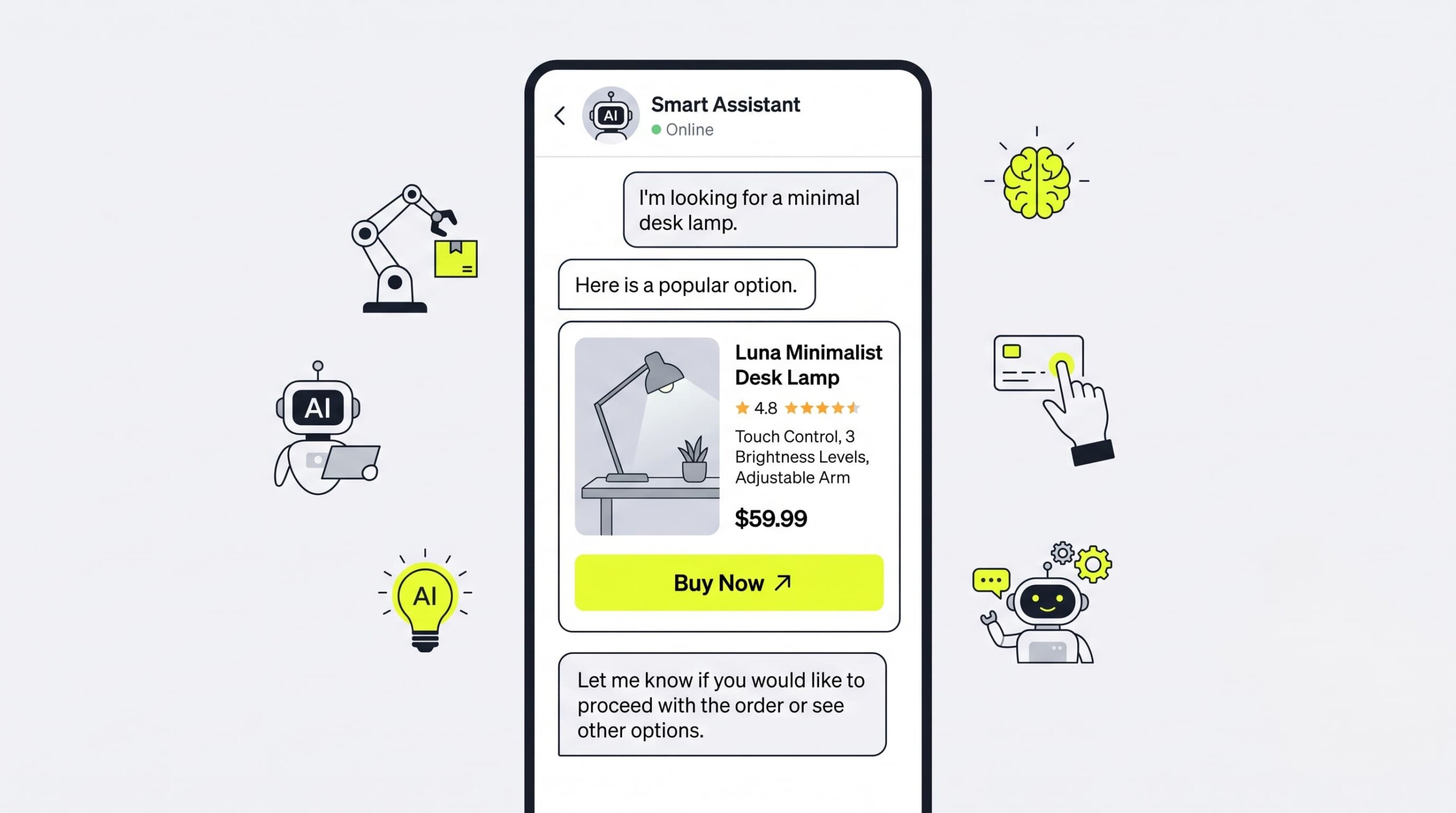
Every woocommerce vs shopify 2026 comparison has to account for the Shopify Renaissance Winter ’26 release. Its headline feature: Agentic Storefronts, which let merchants sell directly inside AI conversations on ChatGPT, Gemini, and Perplexity. The new Product Network adds commission-based sales of complementary products from other Shopify merchants. Offline retail got hardware upgrades too. POS Hub with wired connectivity arrived in March 2026, following POS v11.0 in February 2026.
WooCommerce Database Optimization: HPOS and Flexible Checkout
WooCommerce offsets its speed limits with HPOS (High-Performance Order Storage), which moves order data into dedicated database tables instead of the shared WordPress posts table. For woocommerce conversion optimization, React-based Checkout Blocks let merchants restructure the entire checkout for free. Shopify gates the same level of checkout editing behind its enterprise tier. That single difference saves customization-heavy stores thousands per month.
WooCommerce vs Shopify Market Share and Popularity
Both platforms dominate — in different segments of online retail. WooCommerce vs Shopify market share data shows WordPress powering over 43% of the entire web, which makes WooCommerce the default choice for content-heavy sites. Shopify leads among ready-to-launch US DTC brands and runs the largest commerce app marketplace.
Design Customization: WooCommerce vs Shopify
Code access decides more than aesthetics in the woocommerce vs shopify vs wordpress debate: WooCommerce inherits the fully open-source WordPress codebase, so developers can change any logic or style without limits. Shopify runs as a closed-source SaaS, which restricts deep code changes but ships an AI theme generator for fast launches.
WooCommerce's Open Source Code and Custom Extensions
WordPress gives WooCommerce store owners access to thousands of free and paid plugins and templates built over two decades. A developer can rewrite any function on the site and bend it around specific business processes — custom licensing, tiered wholesale pricing, unusual checkout flows. That freedom settles the woocommerce vs shopify question for brands with nonstandard catalog logic. No platform approval required.
Shopify's Liquid Engine and AI Theme Generator
Shopify’s theme store offers 1,000+ mobile-optimized templates, a weight-bearing argument in any woocommerce vs shopify 2026 evaluation. All themes run on Liquid, Shopify’s proprietary templating language, which developers must learn before making structural edits. The AI Theme Generator now builds a complete store layout from a single text prompt. Beginners get a polished storefront in minutes, not weeks.
SEO and Marketing: WooCommerce vs Shopify
In the woocommerce vs shopify vs wix hierarchy of SEO flexibility, WooCommerce sits at the top, Shopify in the middle, and drag-and-drop builders like Wix at the bottom. Shopify generates automatic sitemaps, canonical tags, and built-in Shopify Email. WooCommerce hands developers granular technical control through plugins like Yoast and RankMath.
Technical SEO and Custom Schema Control on WooCommerce
WooCommerce grants absolute freedom over URL structure, redirect rules, and custom Schema markup for every product. Fine-grained control of rich snippets feeds directly into woocommerce conversion optimization, since star ratings and price markup raise click-through rates in search. One warning applies. A hosting migration or database failure can take the site down temporarily — and rankings drop with it.
Out-of-the-Box Marketing and Shopify Email Automations
Shopify Email includes 10,000 free emails per month on every plan, so new merchants launch campaigns on day one. Store owners edit meta titles, descriptions, and image alt text directly from each product’s admin panel — no plugin required. Merchants weighing that simplicity against woocommerce tools for higher conversions, such as plugin-based A/B testing suites, usually find Shopify faster for non-technical teams. Setup takes minutes.
Security and Hosting: WooCommerce vs Shopify
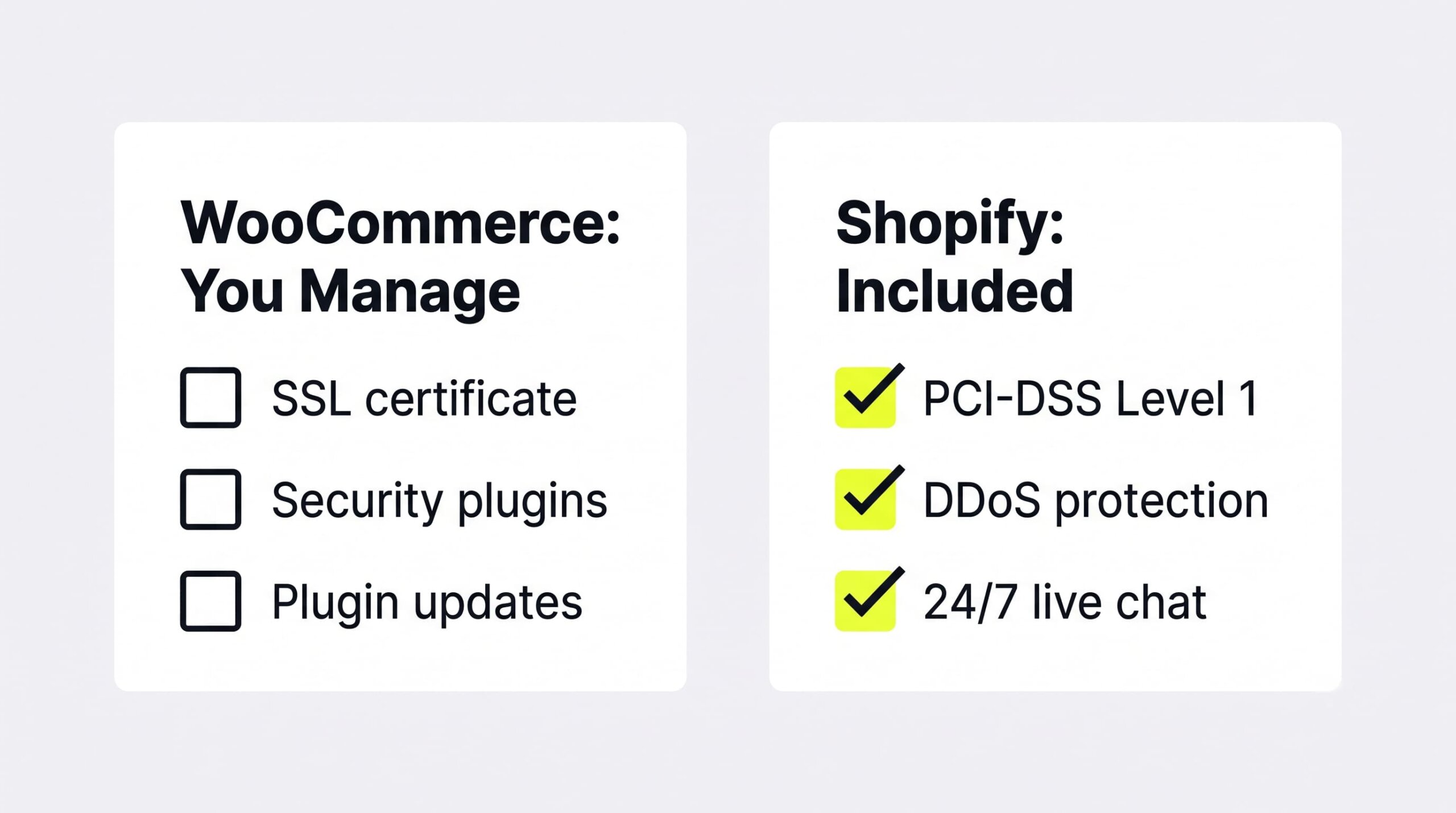
WooCommerce vs Shopify vs Squarespace splits into one self-managed model and two closed clouds. Shopify (like Squarespace) bundles PCI-DSS compliance and 24/7 chat support into the subscription. WooCommerce owners handle their own hosting selection, SSL setup, and security plugin updates.
Self-Managed Security: SSL, Jetpack, and Wordfence on WordPress
Every WooCommerce owner must choose a reliable hosting provider that includes a free SSL certificate. Security plugins such as Jetpack, Wordfence, or Sucuri add a recurring line item that many merchants omit from their woocommerce vs shopify cost math. Regular vulnerability scans of installed plugins are non-negotiable. One outdated extension can expose the entire store.
Vendor-Secured Infrastructure and 24/7 Live Support on Shopify
Shopify wins the woocommerce vs shopify security matchup on defaults: the platform absorbs 100% of DDoS protection and ships Level 1 PCI-DSS compliance with every store. Merchants never patch a server or renew a certificate. 24/7 live chat support resolves payment and configuration issues without hiring outside help. For solo founders, that safety net alone justifies the subscription.
Selecting WooCommerce vs Shopify for Your Business Model
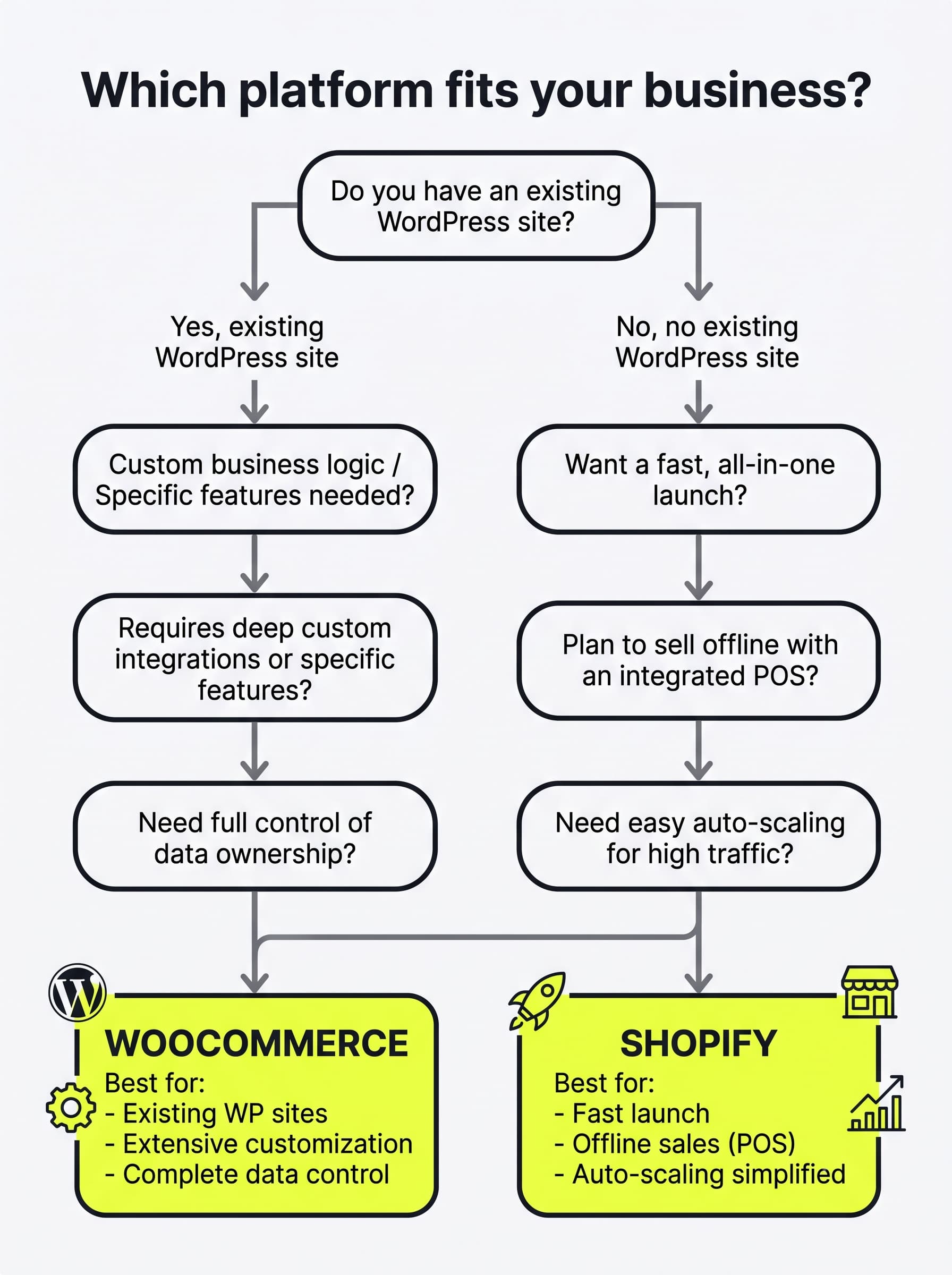
WooCommerce vs Shopify for dropshipping tilts toward Shopify, thanks to ready-made supplier integrations and one-click fulfillment apps that suit fast-launch DTC brands. WooCommerce wins for content-driven projects already running on WordPress and for stores with nonstandard sales logic.
When to Choose WooCommerce: Content Sites and High Customization
WooCommerce fits merchants who already run a large content site or blog on WordPress. If your catalog needs custom logic — say, digital products with special licensing terms — the woocommerce vs shopify vs wordpress equation resolves in favor of open source. Data ownership matters here too. WooCommerce never charges a percentage of your revenue as you grow.
When to Choose Shopify: Speed, Scale, and Offline Retail
Shopify fits founders who need a launch in under 30 days without hiring developers. Retailers selling offline get a reliable built-in POS terminal that syncs inventory across channels automatically. Auto-scaling absorbs flash-sale traffic spikes with zero server work — a decisive edge in any woocommerce vs shopify 2026 shortlist. Set it up. Sell.
WooCommerce vs Shopify Reddit: What Real Store Owners Say
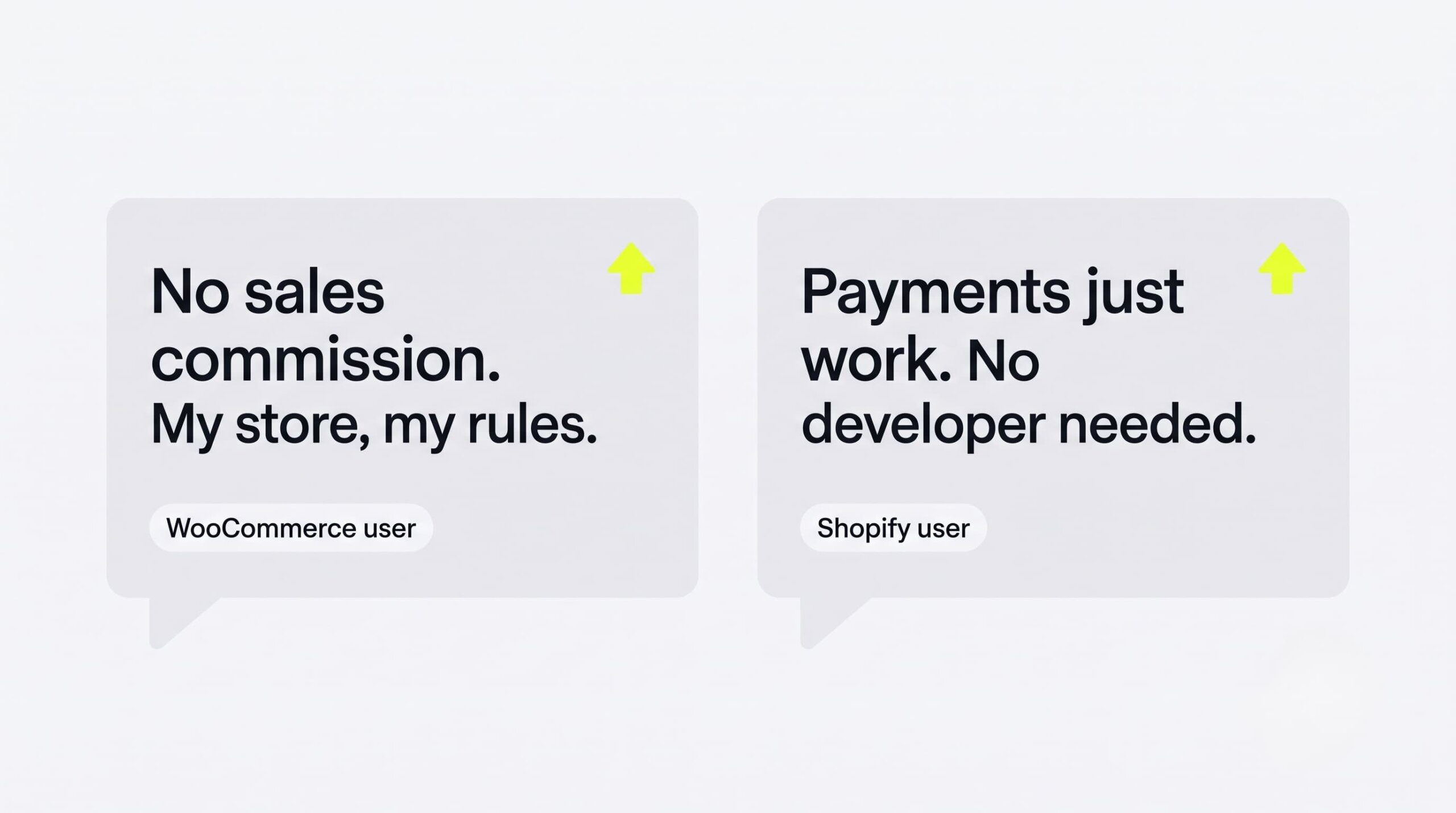
WooCommerce vs Shopify Reddit threads show a consistent split among working merchants. WooCommerce advocates cite financial independence and freedom from forced updates; Shopify loyalists value stable payment processing and never keeping a developer on retainer.
Threads like “Did you choose Woocommerce over Shopify?” repeat one conclusion. WooCommerce rewards owners who can code or budget for a developer. For solo entrepreneurs, redditors call Shopify the simpler path — even at a higher monthly price.
WooCommerce vs Shopify FAQ
Direct answers below match the most common “People Also Ask” queries from Google search results.
Which one is better, Shopify or WooCommerce?
WooCommerce vs Shopify has no universal winner. Shopify is better for merchants who value a fast launch, ease of use, and 24/7 technical support. WooCommerce is better if you need full control over your data, code, and design — plus lower long-term costs.
What are the disadvantages of WooCommerce?
WooCommerce requires you to configure hosting, a domain, and security plugins yourself. The platform also demands basic technical skills (or a developer) to resolve plugin conflicts and optimize the database as the store scales.
How is Shopify different from WooCommerce?
Architecture separates the two. In the woocommerce vs shopify comparison, Shopify is a closed, cloud-based SaaS subscription with hosting and security included in the price. WooCommerce is a free, open-source WordPress plugin that requires separate hosting and grants full control over the site’s code.
Who is Shopify's biggest competitor?
WooCommerce (WordPress) is Shopify’s biggest competitor by market share. BigCommerce serves large B2B brands, while smaller content-driven stores often frame the choice as woocommerce vs shopify vs squarespace. Wix rounds out the field for entry-level merchants.